




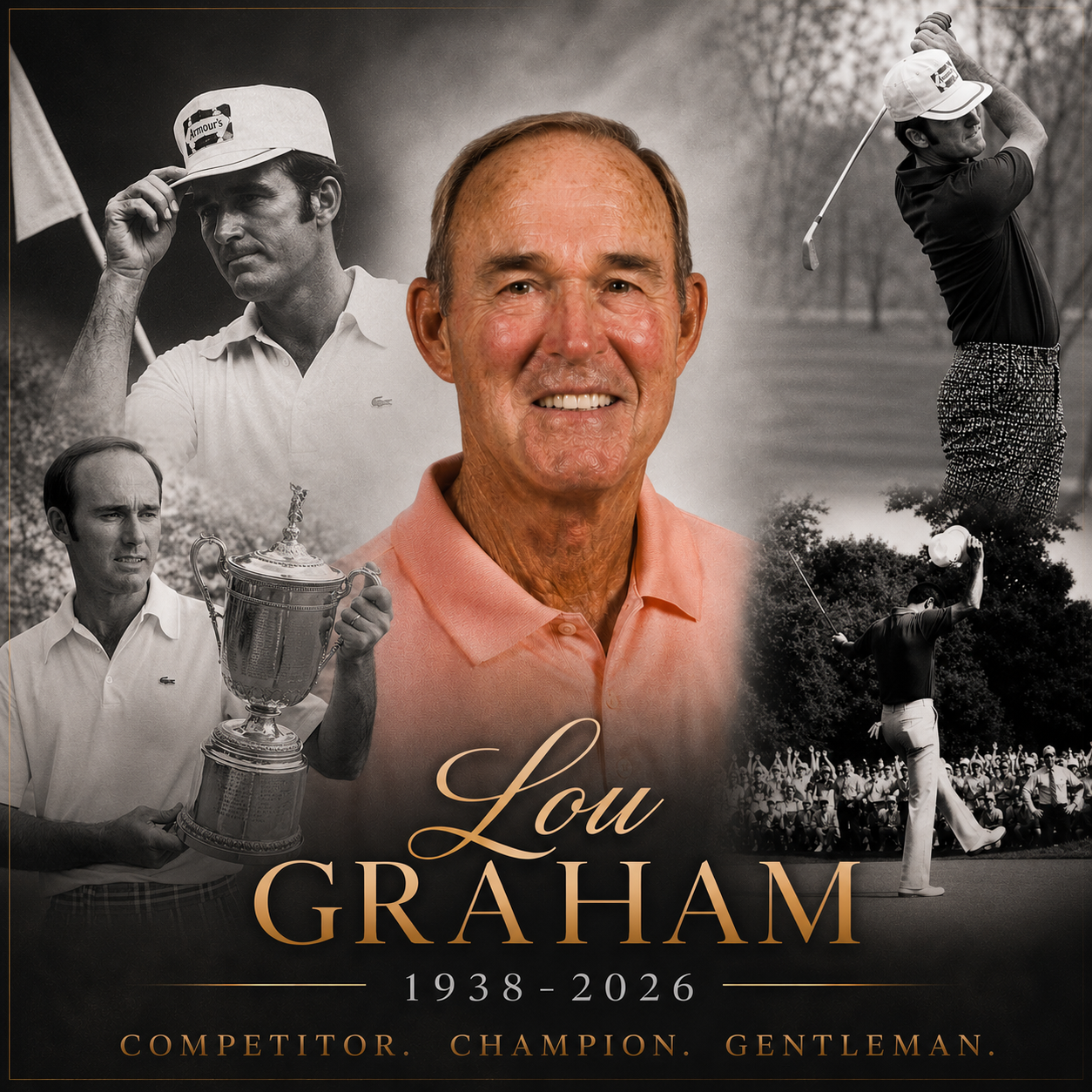
Tennessee golf mourns the passing of Tennessee Golf Hall of Fame member Lou Graham. A major champion, fierce competitor, and true gentleman of the game, Lou left a lasting impact on Tennessee golf and the golf world as a whole. Best known for his victory at the 1975 U.S. Open, Lou’s career was defined not only by excellence on the course, but by the respect and admiration he earned from everyone around him.
As a member of the Tennessee Golf Hall of Fame, Lou’s legacy will forever be woven into the history of golf in our state. His contributions to the game and the example he set for future generations will not be forgotten. We extend our heartfelt condolences to Lou’s family, friends, and all who were fortunate enough to know him.
Rest in peace, Lou Graham. 🕊️
More….
Rain or shine, day or night, the soldiers guarding the Tomb of the Unknown Soldier stand watch with unwavering discipline and honor – an unbroken symbol of sacrifice, service and duty to something far greater than themselves.
It is one of the most sacred responsibilities in the United States military. And for Lou Graham, it was a responsibility that never truly left him.
Long before he became the 1975 U.S. Open champion, Graham served in the U.S. Army as a member of the famed Old Guard, Company E of the Third U.S. Infantry Regiment – the ceremonial Honor Guard entrusted with guarding the Tomb of the Unknown Soldier at Arlington National Cemetery.
The precision. The humility. The quiet discipline. The understanding that service is not about recognition, but responsibility. Those values became the foundation of Graham’s life long after he left Arlington.
And decades later, even in the final years of his life, that same commitment still defined him.
At Golf House Tennessee, Graham became a steady and familiar presence at PGA HOPE sessions, faithfully showing up week after week to mentor and encourage fellow veterans through the game of golf. Rain or shine, Graham was there, offering wisdom, conversation and quiet encouragement to those who had also served their country. He never sought attention for it. He simply believed in showing up for people.
That was Lou Graham.
“Lou very rarely missed a Wednesday teaching PGA HOPE,” said Dick Horton, who spent the better part of five decades leading the Tennessee Golf Foundation, the Tennessee Golf Association and the Tennessee Section PGA.
“He took that as seriously as anything he did. The soldier golfers were in awe that they had a U.S. Open champion there teaching them, and it was something Lou took a lot of pride in. Even though he was late on the back nine of life, he was always there, rain or shine.”
Graham passed away peacefully on Monday, May 11, at the age of 88.
The golf world will remember Graham as a U.S. Open champion, and Horton considers him one of the greatest players Tennessee has ever produced.
Born in Nashville in 1938, Graham’s journey in golf began at Shelby Park, where, as a young boy, he learned the game by studying Sam Snead’s Quick Way to Better Golf. Long before he became a major champion, Graham was simply a kid from Tennessee who fell in love with the game and dedicated himself fully to mastering it.
That dedication eventually carried him to the highest level of professional golf.
Graham enjoyed a 23-year PGA TOUR career highlighted by one of the greatest comebacks in U.S. Open history at Medinah Country Club in 1975. After trailing by 11 shots midway through the championship, Graham battled his way into a playoff before defeating John Mahaffey to capture the U.S. Open title and cement his place among the game’s elite players.
A six-time PGA TOUR winner, Graham also represented the United States on three Ryder Cup teams and competed fearlessly against one of golf’s greatest eras of champions. During the 1970s, few players in the world were more consistent in major championships than the Nashville native.
But those closest to him will remember something even greater – a humble man who carried himself with honor in every chapter of life.
“I never heard anyone have a negative thing to say about Lou,” Horton said. “Nor did he share anything negative about players, golf courses or really anything.”
Graham never missed an opportunity to have a little lighthearted fun, though.
Horton recalled the summer of 1977, when Graham had promised to help work the Tennessee PGA Junior Golf Academy at Fall Creek Falls State Park. Just two days earlier, Graham had finished runner-up to Hubert Green in the U.S. Open at Southern Hills.
After making a tremendous effort to travel from Tulsa, Oklahoma, to Fall Creek Falls in a single day, Graham was greeted by an enthusiastic group of children who had watched him compete on television that weekend.
When Graham asked the group if they had any questions, a little boy raised his hand.
“Mr. Graham,” Horton remembered the boy asking, “if you are one of the best players in the world, how come you missed that two-foot putt on 17?”
Without hesitation, Graham quipped back: “Young man … you make some, you miss some. That’s the way it is.”
From public golf courses in Nashville to the winner’s circle at the U.S. Open, Graham never forgot where he came from. He remained deeply connected to Tennessee golf, always willing to help junior players, PGA professionals and anyone who loved the game.
“Lou Graham represented everything great about the game of golf – a U.S. Open champion whose humility, integrity and love for the game impacted generations,” said Whit Turnbow, president of the Tennessee Golf Foundation.
“Beyond his accomplishments on the course, Lou was a tremendous supporter of junior and veterans golf, deeply believing in giving young people and those who served our country opportunities through the game. His legacy will live on not only through his championship career, but also through the countless lives he inspired with his kindness, leadership and commitment to growing the game the right way.”
In a sport that often measures greatness through trophies and championships, Lou Graham’s life was a reminder that character leaves the deepest legacy.
A champion. A veteran. A mentor. A gentleman.
And for Tennessee golf, a legacy that will endure forever.